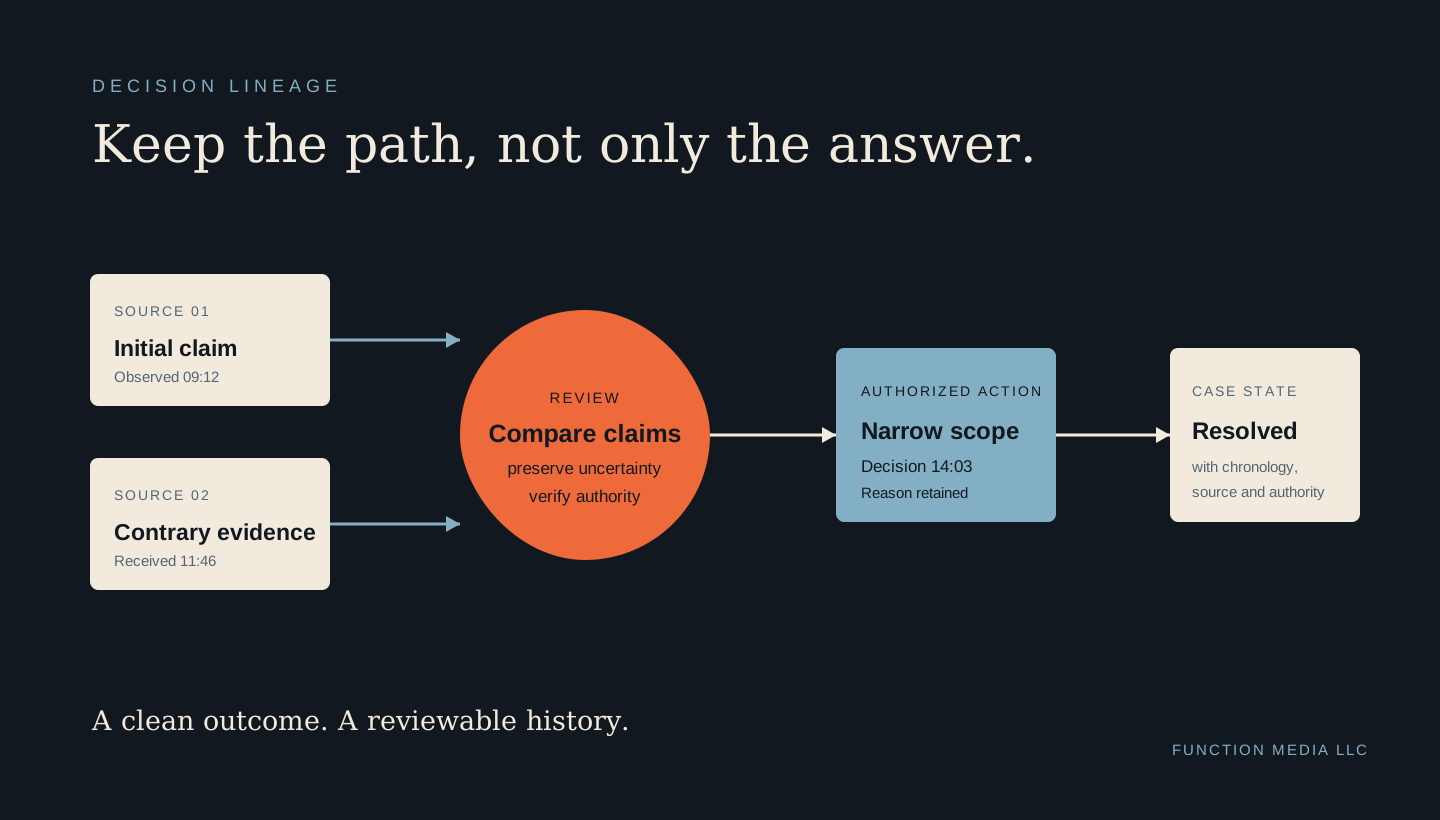
At 9:12 a.m., a record says an issue is open. By 11:46, a reviewer has found a second source that changes what the first record appeared to mean. At 2:03 p.m., a supervisor authorizes a narrower action than the system originally proposed. The final status may fit neatly into one cell. The work that made it trustworthy does not.
This is the quiet mistake inside many institutional systems: they store the latest answer and lose the case.
A row is useful. It can hold an identifier, an owner, a priority and a status. But consequential work is not merely a collection of current values. It is a sequence of claims, evidence, relationships, decisions and authorized changes. When that sequence is flattened, the interface may become cleaner while the operation becomes harder to explain.
Function Media approaches the case itself as a technical object. A case should remain intelligible as it changes: what arrived, where it came from, which person or organization it concerned, what the evidence supported at that moment, who was permitted to act and why the next state followed.
The row shows state. The case preserves meaning.
Imagine opening a record marked resolved. That status answers one question and creates several more. Resolved by whom? Against which version of the evidence? Did a later document contradict the initial report? Was the matter closed because the condition ended, because it fell outside scope, or because another office assumed responsibility?
Those distinctions are not administrative decoration. They determine whether the next person can rely on the record.
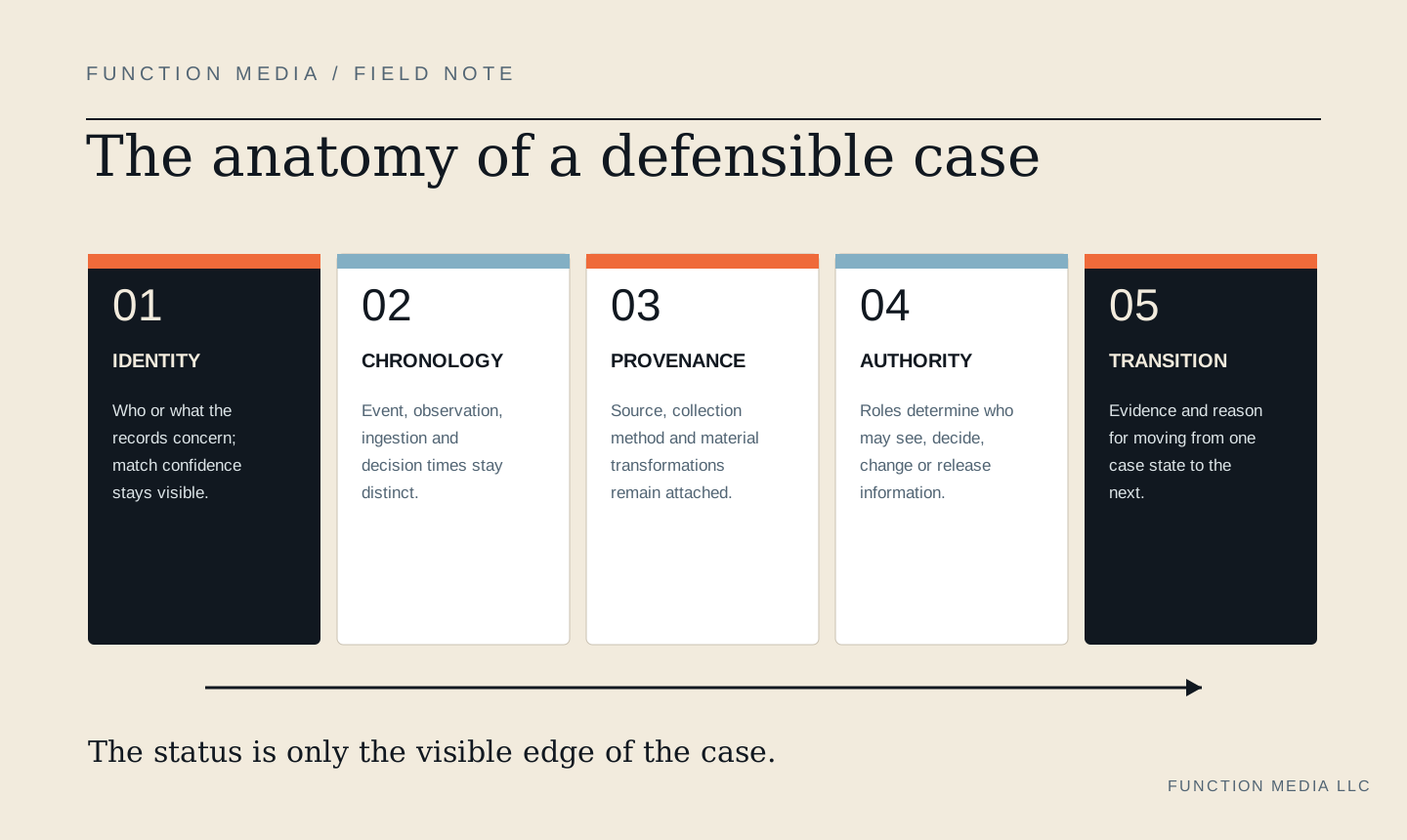
A durable case model preserves at least five layers:
- Identity: the people, organizations, products, facilities or locations involved—and the confidence behind each match.
- Chronology: when an event occurred, when it was observed, when it entered the system and when it was reviewed.
- Provenance: the source of each claim, the method of collection and any transformations applied.
- Authority: which role could view, decide, change or release particular information.
- Transition: the evidence and reasoning that moved the case from one state to another.
Remove any one of these and a current answer can remain visible while its institutional meaning disappears.
Time is more than one timestamp
Operational records often carry several clocks. An incident happens at one time, is reported later, enters a system later still and may not be reviewed until a different shift. Treating those moments as one timestamp can reverse cause and effect or make a delayed report look like a delayed response.
The same problem appears when sources update at different speeds. A facility record may change quickly; an official notice may follow after verification; an external list may refresh on its own schedule. A case-aware system should not silently blend those clocks into a single impression of certainty.
Instead, it should preserve the difference between event time, observation time, ingestion time and decision time. That gives an authorized reviewer something more useful than a feed: a defensible chronology.
Contradiction is not dirty data
Many systems are designed to find one clean value. When two sources disagree, the usual instinct is to overwrite, deduplicate or select a winner. Sometimes that is appropriate. Sometimes the disagreement is the most important fact in the case.
A company name may have changed. Two facilities may share a similar address. A status may be current in one system and stale in another. A person may be referenced under several identifiers. The engineering task is not to make the conflict disappear. It is to model the competing claims, evaluate the strength and recency of their sources, and route unresolved ambiguity to someone with the authority and context to review it.
This is where identity resolution, evidence graphs and confidence-aware reasoning become practical rather than ornamental. They allow a system to say: these records probably concern the same entity; this claim is newer but not necessarily more authoritative; this contradiction remains open; no action should be inferred beyond what the evidence supports.