A school schedule is usually treated as a document: a grid of periods, rooms and names. Operationally, it is something larger. It is the time model that allows multiple systems and people to coordinate the same day.
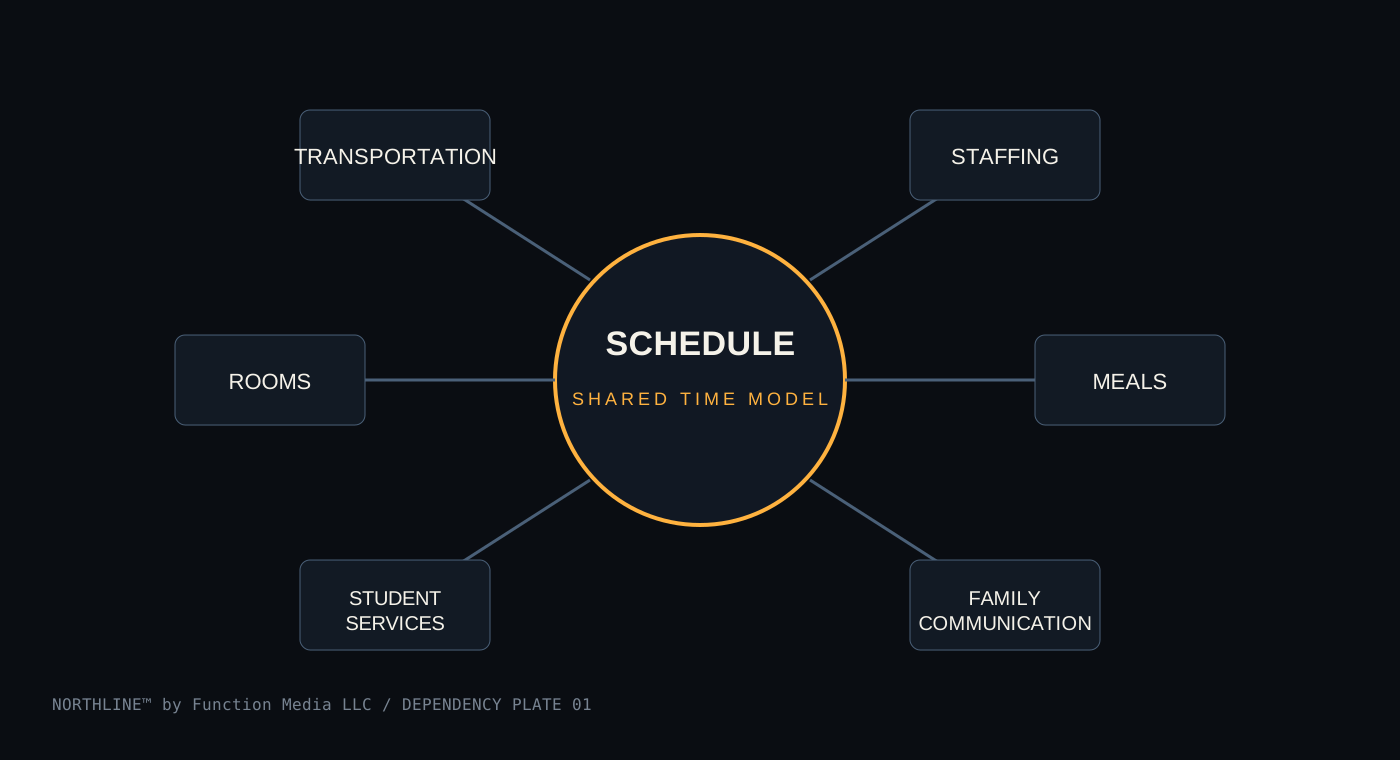
A transportation plan assumes a start time. A cafeteria plan assumes meal periods. A staffing plan assumes coverage. Student services assume that a person, place and window will exist when support is scheduled. Family communication assumes that the message reflects the same version already being used by the school.
When those dependencies disagree, the schedule may look correct while the day is not. The useful question is therefore not merely whether the calendar was updated. It is whether the institution resolved the change across every affected dependency.
Six systems share one clock.
Movement begins before instruction.
Routes, pickup windows, arrival supervision and dismissal all depend on the schedule. A delay or early release can change vehicle timing, staff coverage and family expectations at once.
Coverage is time-bound authority.
A roster says who is employed. The schedule says who is responsible in a particular place at a particular moment. Substitutions, professional development and absences create operational changes that should not be hidden inside informal messages.
Space has capacity, access and readiness.
A room assignment can affect keys or badges, equipment, accessibility, supervision and safety procedures. Changing the room without resolving those conditions can create a valid calendar entry and an unusable destination.
Service windows move with the day.
Meal preparation, delivery, dietary accommodations and staff assignments are linked to time. A schedule change can alter volume and timing even when the menu remains unchanged.
Support cannot be reduced to an appointment.
Authorized student services may depend on provider availability, location, transportation and instructional context. A moved period can create a collision that a static calendar does not explain.
The message must reflect the operating state.
Families, staff and students need the version that will actually govern the day. Sending a notice is not the same as resolving conflicting calendars or confirming receipt where the change is material.
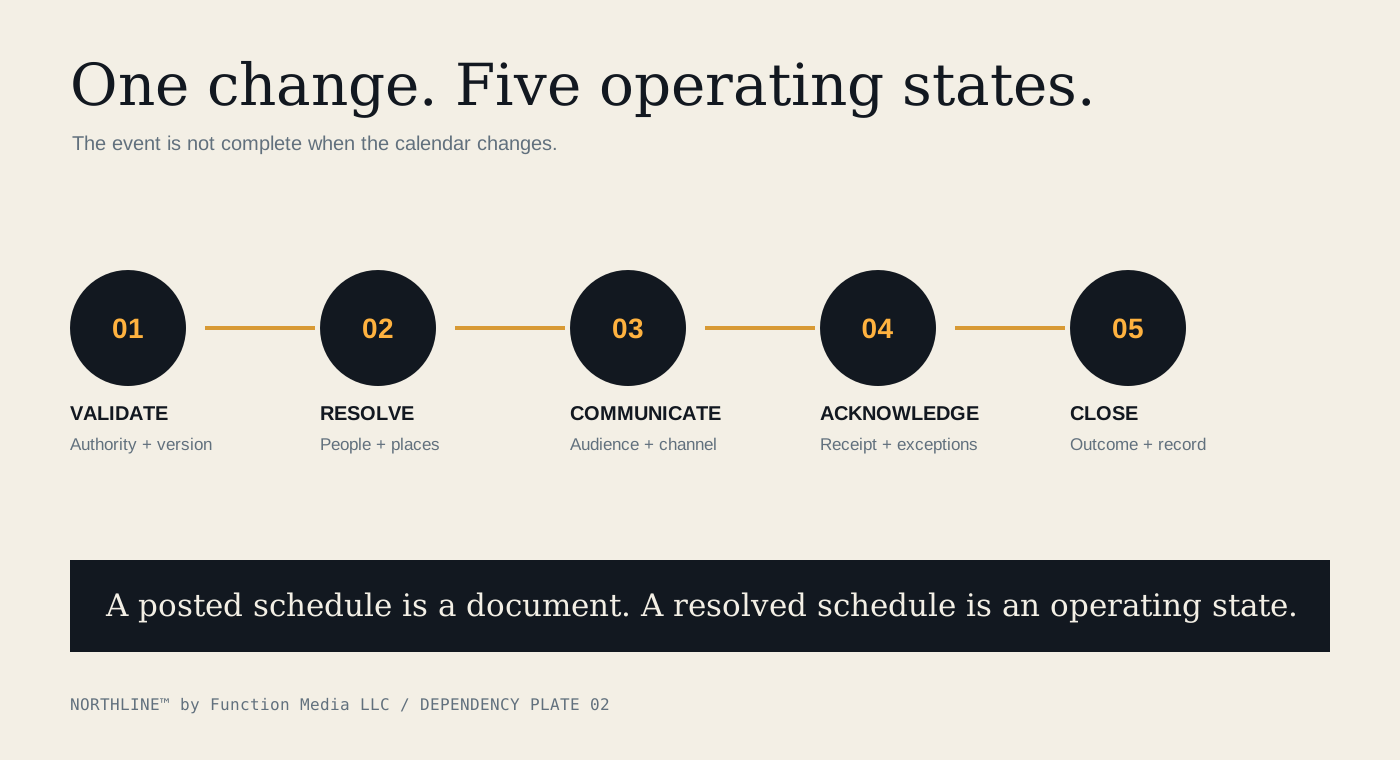
The schedule is not complete when the grid changes. It is complete when the dependencies agree.
A shared time model becomes operational only after downstream effects are visible and resolved.
A change needs a version and an authority.
Schedule changes should not arrive as unexplained replacements. A reviewable record identifies who authorized the change, when it becomes effective, which version it replaces, and whether the change is temporary, recurring or permanent.
That record also needs scope. Does the change apply to one student, a classroom, a route, a school or the district? Does it alter instruction, access, transportation, meals or services? Without scope, downstream systems can interpret the same change differently.
Versioning is not administrative decoration. It is how the institution can later answer which schedule governed a decision at a specific time.
Resolve impact before broadcasting certainty.
Communication often becomes the first response to a schedule change. But sending a message before the dependencies have been checked can distribute certainty the institution has not earned. The message may be accurate about the time while wrong about transportation, location or available service.
A stronger process validates authority, identifies affected dependencies, resolves collisions, selects the appropriate audiences and channels, records acknowledgment where required, and preserves remaining exceptions. Communication then reflects an operating state instead of merely announcing an intention.
Exceptions reveal the real system.
Most days may fit the published pattern. Operational intelligence becomes valuable when the pattern breaks: a bus arrives late, a staff member is absent, a room becomes unavailable, a meal service shifts, or a student service conflicts with a changed period.
The system should make those exceptions visible without turning every variation into an emergency. It should preserve the source of the change, the affected dependencies, the responsible roles and the unresolved conditions. Authorized people still decide what to do; the technology helps them see what the decision touches.
What NORTHLINE is being designed to support.
NORTHLINE™ by Function Media LLC is being developed as K–12 district-operations intelligence infrastructure. Its public design direction focuses on connecting permitted operational records across attendance, transportation, communication, services, safety and administrative workflows while keeping provenance, uncertainty and accountable human review visible.
This article presents a systems principle. It is not a claim of school-district deployment, approval, certification, guaranteed outcome or autonomous decision authority. It does not disclose proprietary implementation methods.
The operating test is practical.
When a schedule changes, can the district show which version applied, who authorized it, which dependencies were affected, who received the new state and what remained unresolved? If not, the calendar may be current while the institution is still operating across different versions of the day.