
Operational systems often use alert and escalation as if they were interchangeable. They are not. An alert is an observation that deserves attention. An escalation changes who is responsible, what response is expected, and how quickly the institution must act.
That distinction matters because organizations can generate thousands of alerts without producing a single accountable transition. A flashing indicator may be technically correct while the operating process around it remains undefined. No one may know which rule fired, whether the evidence was complete, who accepted responsibility, or what ended the event.
The remedy is not simply more notifications. It is a reviewable escalation contract: a defined set of checkpoints that turns a condition into an assigned, acknowledged and closable institutional action.
Five checkpoints separate signal from action.
What condition was actually detected?
The system should preserve the source record, observation time, source health and any transformation applied before the alert appeared. An operator needs to know whether the condition came from a direct measurement, a reported event, a correlation or an inference. The interface should not flatten those evidence classes into the same visual certainty.
Which threshold turned the condition into concern?
A threshold is a decision rule, not a color. Its value, scope, effective date and version should be recoverable. If the rule depends on multiple signals, the system should preserve the combination that qualified. If a threshold changed after the event, the historical record should still show the version that applied at the time.
Who is permitted to escalate?
Escalation should be tied to role and authority. Some transitions may be automatic; others may require human validation. Either way, the system should record the policy basis and the actor—or automated rule—that changed the event state. Without that record, urgency can expand while accountability disappears.
Did the responsible function receive it?
Delivery is not receipt. A message can leave the system without reaching an available, authorized person. A robust process distinguishes dispatched, delivered, acknowledged and reassigned states. It also defines what happens when acknowledgment does not occur within the expected window.
What evidence ended the escalation?
Closure needs more than a dismiss button. The record should identify the disposition, the evidence considered, the action taken, the person or role responsible, and any follow-up condition. False positive, duplicate, resolved, transferred and expired are materially different outcomes and should not be compressed into one generic closed state.
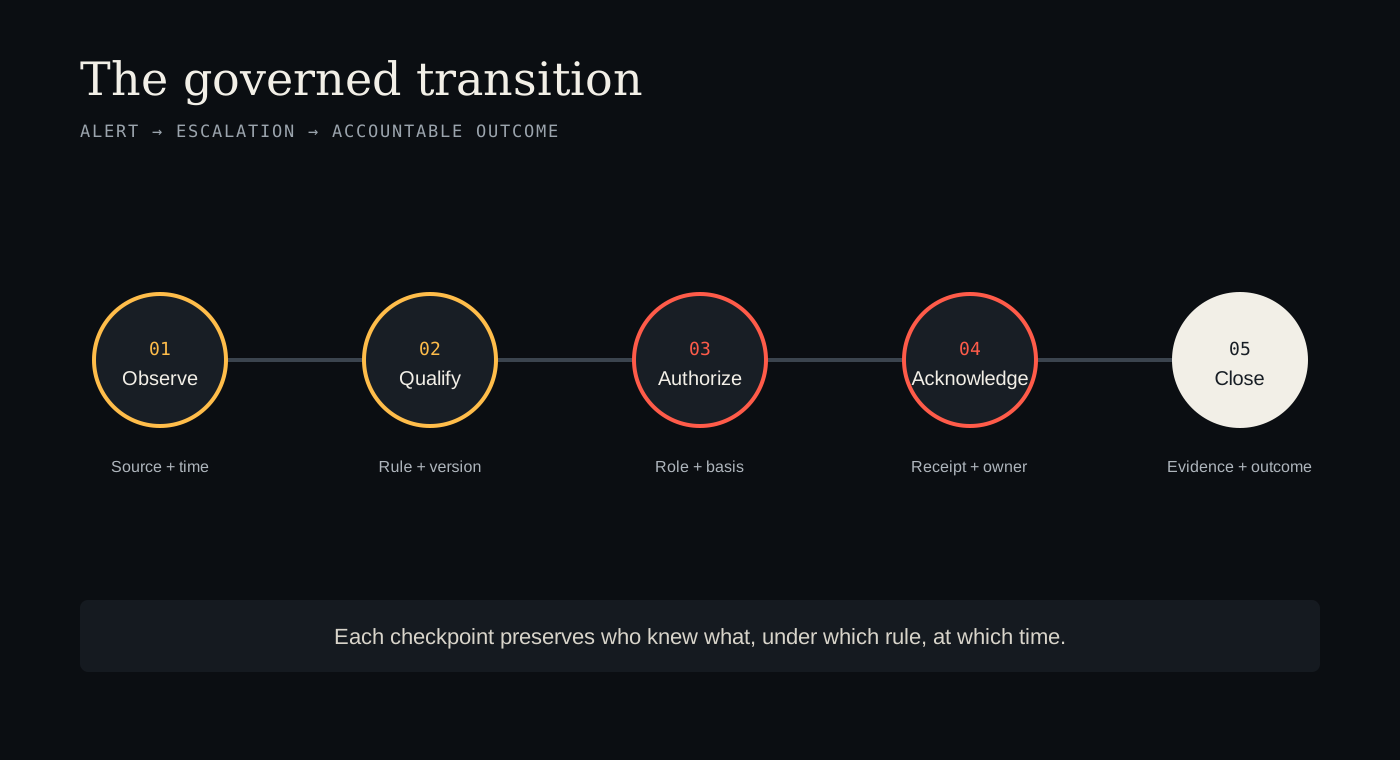
An alert asks for attention. An escalation assigns responsibility.
The moment responsibility changes, the evidence standard should become more demanding—not less.
The threshold must survive the interface.
Thresholds are often buried in application settings, local procedures or undocumented judgment. That makes retrospective review fragile. When an institution later asks why an event escalated, the screen may show the outcome but not the rule that produced it.
A reviewable system treats the threshold as part of the case record. The record should include the rule identifier, version, values, applicable scope, exceptions and effective period. It should also show whether the threshold was satisfied by one observation, an accumulation over time, a cross-source correlation or a human determination.
This does not mean exposing every internal parameter to every user. It means preserving the basis at the appropriate access level so authorized reviewers can distinguish a valid transition from a configuration accident.
Escalation needs an evidence packet.
The evidence packet is the minimum durable context that travels with the event. It allows the receiving team to understand what changed without reconstructing the alert from scattered systems. It also protects the institution from a familiar failure: forwarding urgency while losing provenance.
At minimum, the packet should carry the triggering observation, the rule and version, source-health context, confidence or uncertainty, the actor that authorized the transition, the intended recipient, acknowledgment history, material updates and final disposition. Access controls may limit visibility, but they should not break the chain of responsibility.
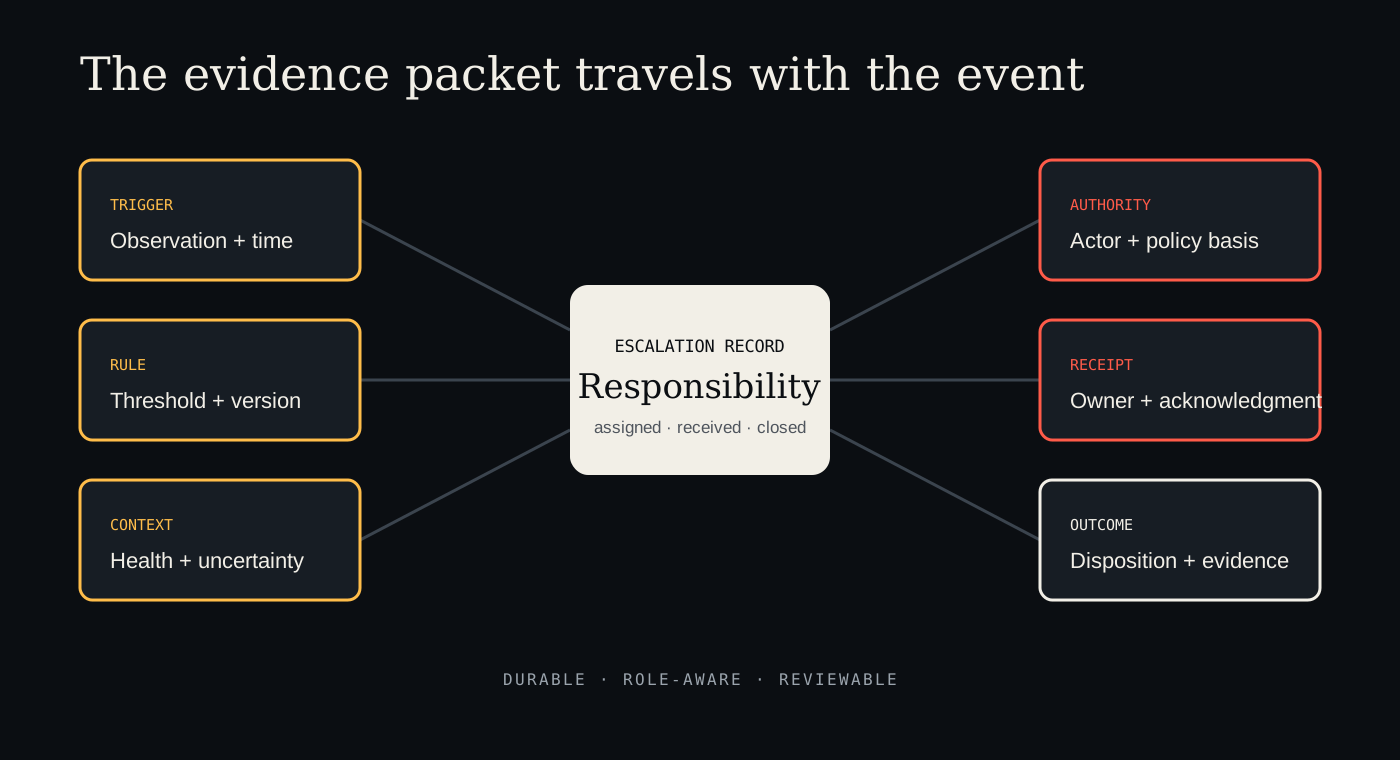
Receipt is an operating state, not a courtesy.
Many workflows stop measuring at notification. That is the point where operational uncertainty begins. A message may be filtered, delayed, routed to an unavailable role or acknowledged without ownership. Each of those conditions requires a different response.
Acknowledgment should therefore be explicit and time-bounded. The system should know when responsibility was accepted, by whom, under which role, and whether the assignment was later transferred. If the expected receipt does not occur, the next routing rule should be visible and reviewable rather than improvised under pressure.
Closure is where institutional learning begins.
A well-formed closure record does more than end noise. It creates a source for evaluating whether the threshold was useful, whether the evidence packet was sufficient, whether the right function received the event, and whether the response matched policy. Over time, those outcomes can reveal alert fatigue, routing gaps, rule drift and recurring evidence failures.
That analysis should not erase individual events or retroactively rewrite the rule that applied. The organization needs both: stable historical records and a controlled way to improve future thresholds.
What VERISCOPE is designed to preserve.
VERISCOPE™ by Function Media LLC is being developed as evidence-centered operational-intelligence infrastructure. Its public design posture emphasizes multi-source provenance, explicit rule state, bounded confidence, role-based authority, acknowledgment, durable event history and accountable human review.
This article describes a systems principle. It is not a claim of government approval, certification, institutional deployment, guaranteed outcome or autonomous decision authority. It does not disclose proprietary implementation methods.
The operating question is simple.
When an event becomes an escalation, can the institution show why the transition occurred, who had authority, who accepted responsibility, and what evidence ended it? If not, the system may be generating urgency without creating accountability.