
In operational systems, “live” is often treated as a visual style. Numbers refresh. Markers move. A timestamp changes. None of those behaviors proves that the underlying evidence is current, complete or fit for a consequential decision.
The harder standard is architectural. A responsible system should identify where information came from, when the source last responded, when the record was observed, which parts of the operating picture are stale, and what continuity rule was applied when an upstream source failed.
Four things a live system must prove.
When was this evidence actually observed?
Event time, publication time, ingestion time and display time answer different questions. A credible interface labels the clock it is showing and does not allow a recent screen refresh to disguise an old source record.
Which sources are responding—and which are not?
Source health belongs in the operational picture. Timeouts, parse failures, authorization errors and partial responses should be visible as source-specific conditions, not compressed into a reassuring global “online” badge.
What remains when a source disappears?
Removing every last-known-good record during a transient outage can create the false appearance that the world is empty. Preserving recent evidence may support continuity, but it must be explicitly labeled stale and bounded by a defined retention policy.
Can a responsible person inspect the basis?
The system should preserve source lineage, transformations, confidence limits and the distinction between observation and inference. Human review is meaningful only when the reviewer can reach the evidence behind the alert.
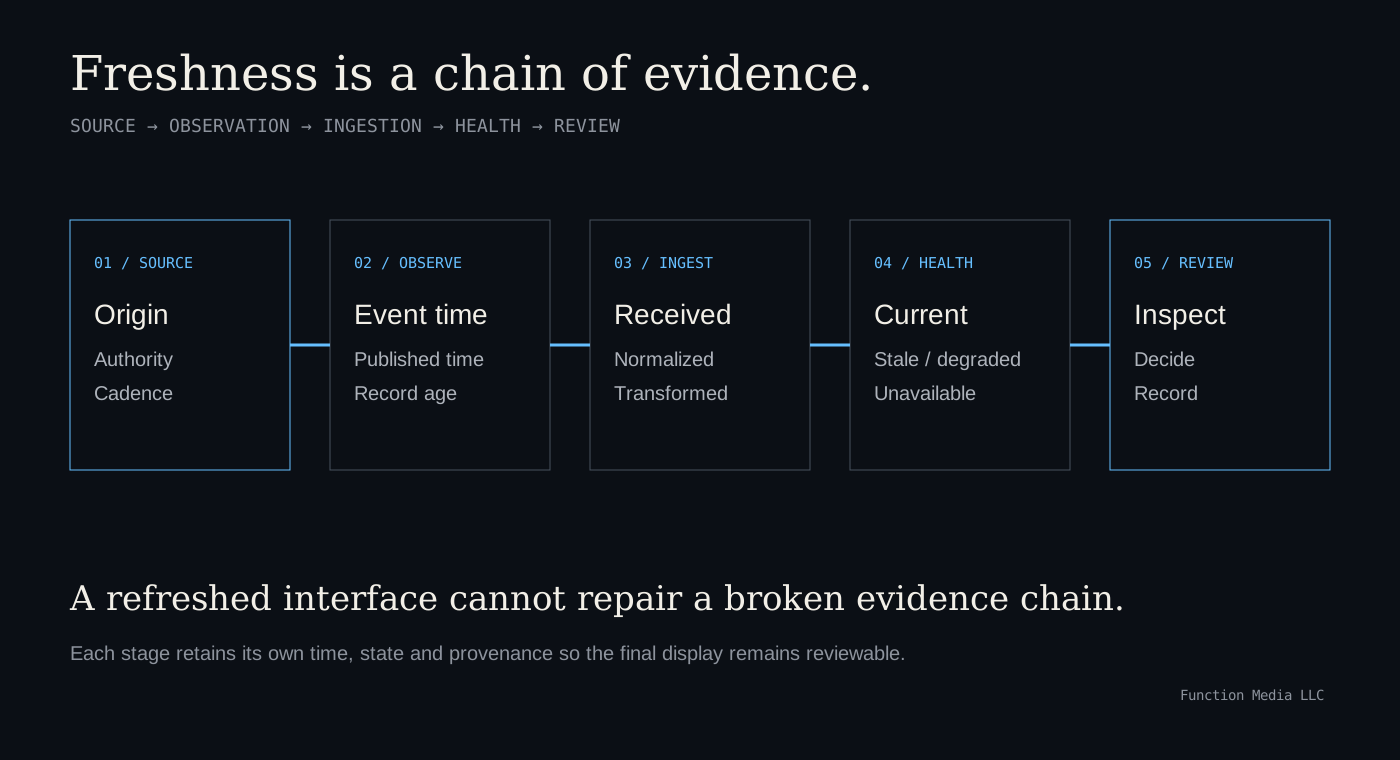
A live map is a presentation. A live system is an evidence contract.
The contract is simple to state: disclose what is current, what is delayed, what is missing, what has been preserved, and what requires human judgment.
Partial truth needs an explicit state.
Many operational environments depend on multiple upstreams. One source can be current while another is delayed. A third may be unavailable. Calling the entire system either “live” or “offline” erases that mixed condition.
A better model evaluates health per source and per domain. The interface can then distinguish current evidence, stale continuity data, degraded coverage and unavailable feeds. That distinction protects decision-makers from two equal failures: treating missing evidence as proof that nothing is happening, or presenting old evidence as if it were new.
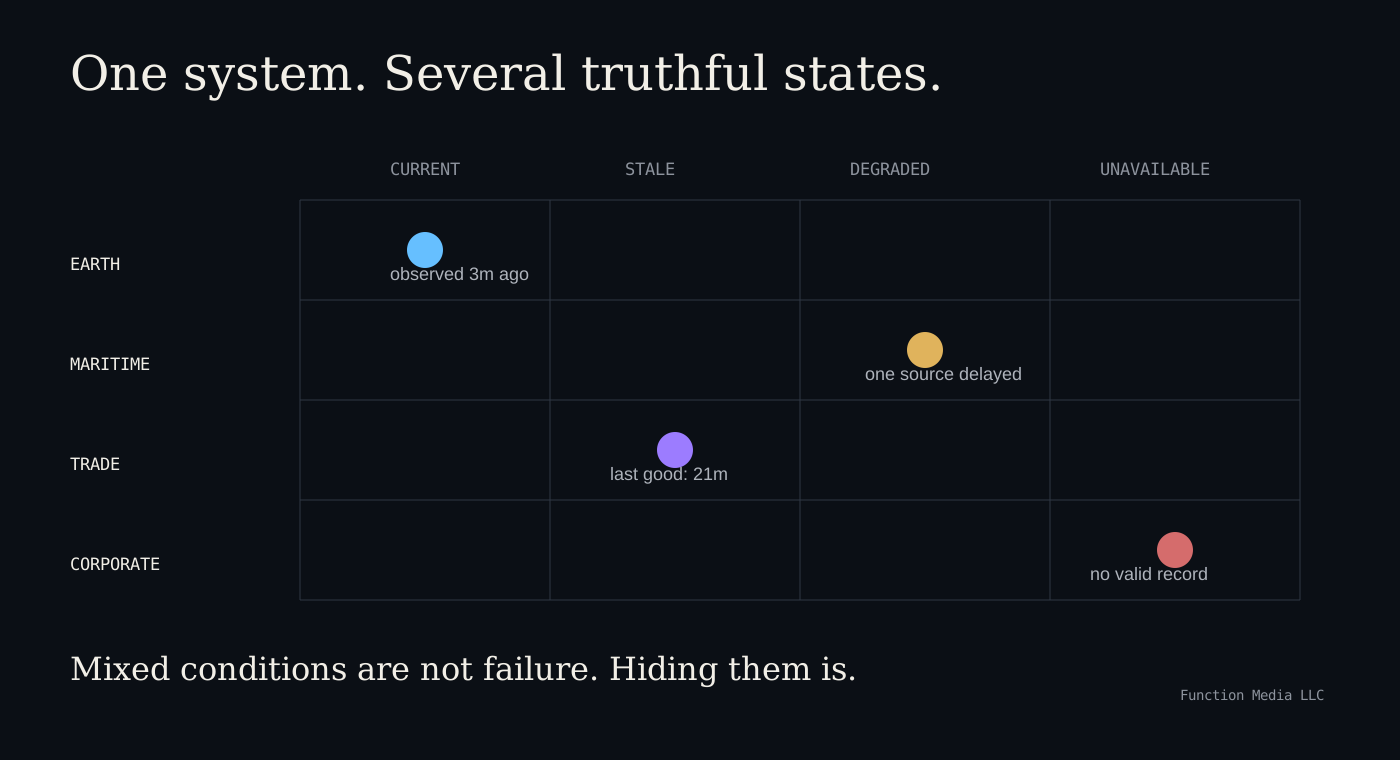
What VERISCOPE is designed to preserve.
VERISCOPE™ by Function Media LLC is being developed as evidence-centered operational-intelligence infrastructure. Its public design posture emphasizes multi-source ingestion, explicit provenance, source-level health, last-known-good continuity, bounded confidence, role-based access and human-reviewed action.
This article describes a systems principle, not a claim of government approval, certification, institutional deployment or guaranteed outcome. It also does not disclose proprietary implementation methods.
The standard should be visible.
“Live” should never be a decorative label. If a system cannot show the age, condition and origin of its evidence, the user is being asked to trust motion rather than inspect truth.