At 6:42 in the morning, a side entrance changes from closed to open. The sensor has done its job. It has reported a physical state.
But the signal does not explain itself. A facilities employee may be receiving a delivery. A custodian may be beginning an approved route. The contact may have been placed in maintenance after an overnight repair. The door may be held longer than the local operating rule allows. Or the event may genuinely require attention.
The same electrical transition can sit inside several different operational realities. Treating every signal as an incident creates noise. Treating the signal as meaningless creates a blind spot. The difficult work is connecting the event to enough trustworthy context that a responsible person can decide what it means.
That distinction is central to NORTHLINE™ by Function Media LLC: school operations are not improved by collecting isolated alerts. They improve when systems preserve time, location, expected activity, maintenance state, source health, ownership and review.
A device reports state, not intent.
A magnetic contact is precise about one narrow condition: whether its two components are aligned. An access-control reader can report that a credential was presented. A camera can record a scene. A work-order system can show that maintenance was scheduled. Each source contributes evidence, but none independently explains the full event.
This is not an argument for more surveillance. It is an argument for disciplined interpretation. The question is not how much data can be gathered. It is which minimum set of authorized, relevant evidence is necessary to distinguish routine operations from an exception—without converting every movement into a permanent profile of a student or employee.
The U.S. Cybersecurity and Infrastructure Security Agency frames school security as a layered, systems-based planning problem rather than a single-device purchase. Its K–12 School Security Guide organizes protection across the grounds perimeter, school grounds, building perimeter and building interior. That structure matters because one doorway is part of a larger operating environment, not the environment itself.
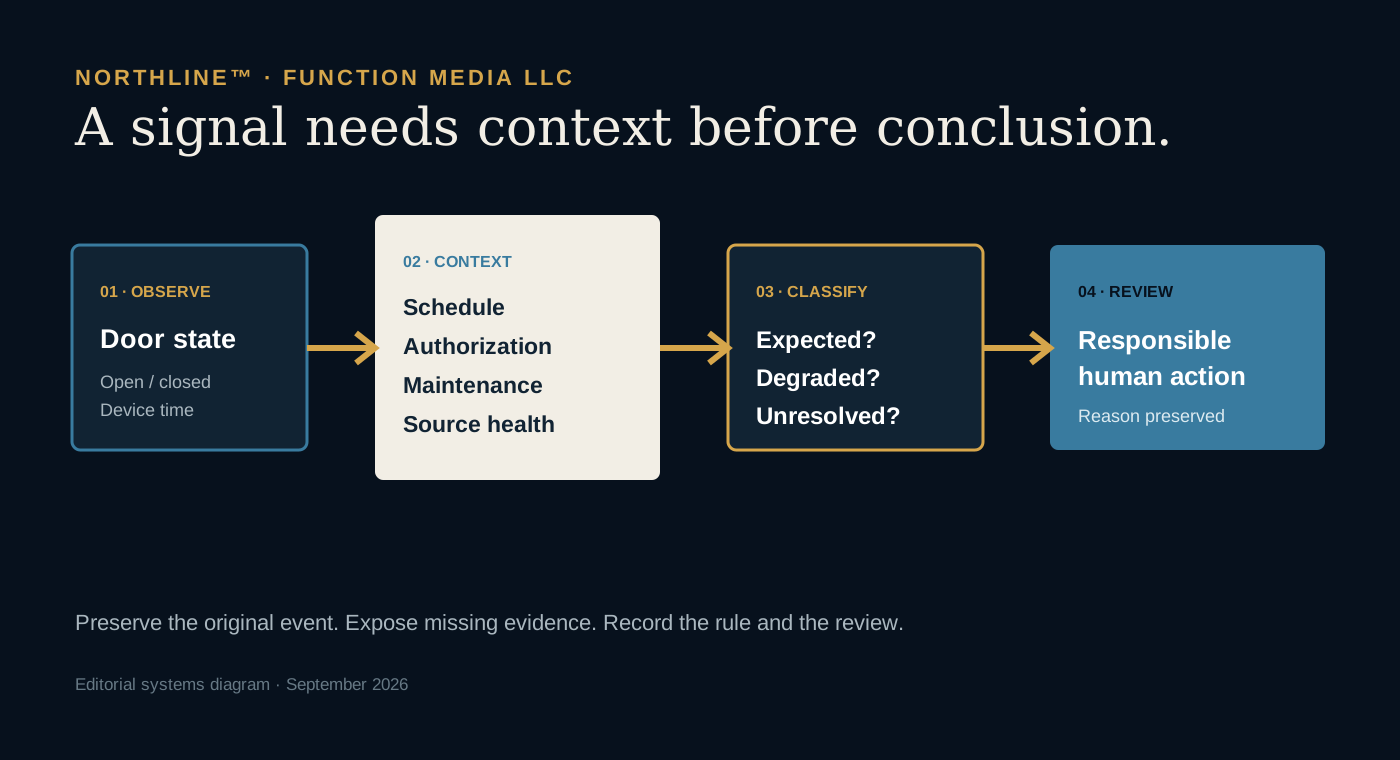
A signal becomes useful when the system can show what changed, where it changed, what was expected, what evidence is missing, and who is responsible for review.
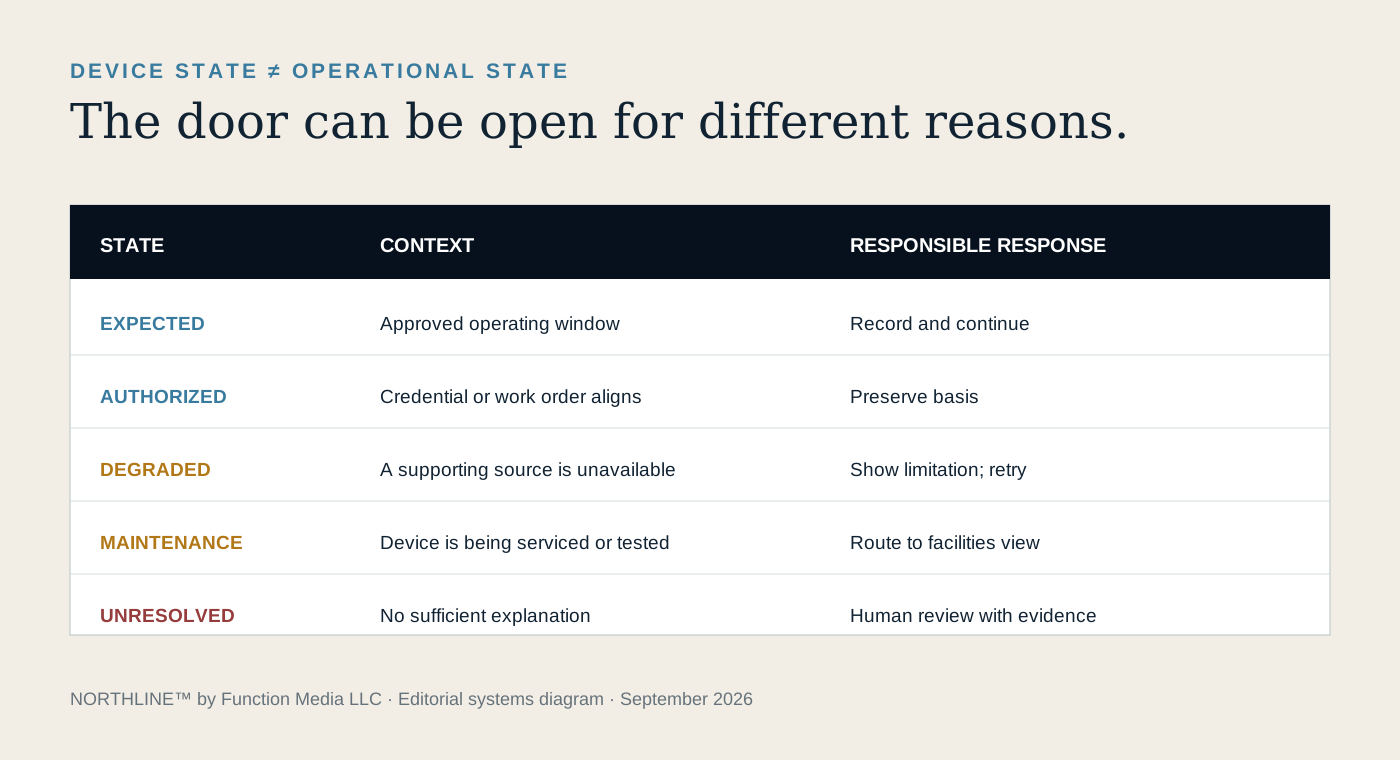
Five states are more useful than one alarm.
Binary hardware does not require binary operations. A school district can preserve the original open-or-closed event while classifying the operational condition separately.
Scheduled activity aligns.
The event fits an approved arrival, delivery, facilities route, program schedule or other documented operating window.
Permission is confirmed.
A valid credential, work order or authorized staff action explains the transition, with only the minimum identity information required for the task.
The evidence chain is incomplete.
The contact may be healthy while a credential service, schedule feed or network path is unavailable. The system should expose that limitation rather than invent certainty.
The device itself is under review.
An open state during repair or testing should remain visible but should not be interpreted through the same rule as an ordinary operating event.
Human attention is required.
The event falls outside the expected window or lacks enough corroborating context. It becomes a reviewable exception—not an automatic accusation.
Schedules are evidence, but they also change.
A schedule can explain why a door opens before students arrive. It can also be wrong. Programs are moved, deliveries run late, custodial routes change and special events create exceptions. The schedule therefore needs its own source, update time and owner.
Responsible operational software should not silently assume that a calendar is authoritative forever. It should show which schedule was used, when it was last updated and whether the event fits the defined window. A stale schedule can turn a legitimate event into a false alarm—or incorrectly normalize an event that deserves review.
The same principle applies to access rosters and maintenance plans. Authority expires. Work orders close. Contractors change. A system that resolves events against yesterday’s permissions may be technically functioning while operationally wrong.
Maintenance belongs inside the intelligence picture.
Security and facilities data are often separated. One team sees door events; another sees repairs, battery replacements, network interruptions and inspections. That organizational split creates avoidable ambiguity.
A contact that repeatedly opens and closes because of alignment drift can resemble unusual activity. A door held during hinge replacement can look like a policy exception. A failed controller can produce silence that appears reassuring. Maintenance context helps explain why a signal changed—or why an expected signal never arrived.
This does not mean every facilities record should be exposed to every user. Role-based access should keep detail proportional to responsibility. A principal may need the operational status and assigned owner. A facilities technician may need the device history. A district analyst may need aggregate reliability patterns. The system should preserve one evidence chain while presenting different, governed views.
Logs should support review, not just accumulation.
NIST describes log management as the process for generating, transmitting, storing, accessing and disposing of event records so they can support investigations, operational troubleshooting and retention requirements. The important word is process. A pile of timestamps is not yet an accountable review system.
A useful record should connect the original device event with the contextual checks applied at that time. It should preserve source health, the rule version, the resulting state, any acknowledgment and the reason the case was closed or escalated. Corrections should append to that history rather than overwrite it.
Retention should also be intentional. More storage is not automatically more safety. District policy, privacy obligations, operational usefulness and legal requirements should determine what is retained, who can access it and when it is removed.
The system should make uncertainty visible.
An operations platform earns trust by refusing to overstate what it knows. If the schedule feed is unavailable, say so. If a credential lookup timed out, show the failure. If the sensor is in maintenance, keep the event but change its interpretation. If the available evidence cannot resolve the event, route it to a responsible person with the reason clearly stated.
NORTHLINE is being developed as district-operations infrastructure that can connect fragmented operational evidence without pretending that a single signal is a conclusion. This public article describes a design principle, not a claim of district deployment, certification, guaranteed prevention or measured safety outcome.